Hemp Education – Basic Training
Hemp Education: Basic Training
Welcome to the front lines of hemp education. At Greatest Generations Hemp Products, we believe in the "old-school" approach: do your research, value quality, and keep things simple. Hemp isn’t a mystery—it’s a versatile, time-tested tool that has returned to the modern world with better standards and clearer science.
Whether you’re curious about the difference between CBD and THC, or wondering how a plant becomes a tincture or gummy, this guide breaks down the essentials. We’re here to help you cut through the marketing noise and focus on what matters—farming standards, clean processing, and finding a consistent routine that fits your life.
Short History of Hemp (World + U.S.)
Hemp’s been in the world’s toolbox for a long time. Across many countries and centuries, it was grown as a utility crop—strong fiber for rope and cloth, durable textiles, paper, and practical goods back when people built what they needed and repaired what they could. Long before anyone talked about cannabinoids, hemp was valued because it was tough, versatile, and worth the field space.
In the United States, hemp also played a practical role in early agriculture and manufacturing, but its story got complicated as cannabis laws and public perception shifted over time. For decades, hemp was tangled up in broader cannabis policy, even though hemp and high-THC cannabis aren’t treated the same under modern definitions. In recent years, hemp has made a comeback thanks to renewed farming, improved testing, and interest in hemp-derived cannabinoids like CBD. Bottom line: hemp isn’t new—it’s new again, returning with modern rules and modern processing.
What Is CBD and THC?
CBD (cannabidiol) is a cannabinoid found in hemp and it’s non-intoxicating. THC (tetrahydrocannabinol) is the cannabinoid most associated with feeling “high.” Some hemp products can contain trace THC depending on the type and testing, which can matter if you’re THC-sensitive or concerned about drug testing—so the honest answer is: always check the label and the lab report when it’s available.
You might also see CBG or CBN listed. Those are “minor cannabinoids,” meaning they show up in smaller amounts and can be part of the product’s overall profile. The important part is simple: the label should tell you what’s inside clearly, and the company shouldn’t act like mystery is a feature.
Cultivation (How Hemp Is Grown)
Cultivation Basics (Seed to Harvest)
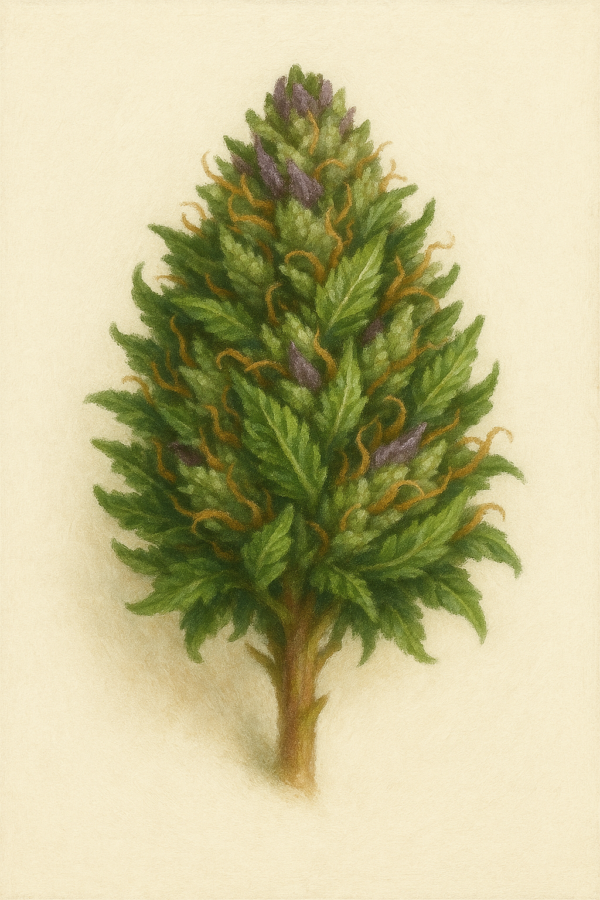
Good products start with good farming. Hemp can be grown for different goals—fiber, grain, or cannabinoids—so farms choose different genetics depending on what they’re producing. Like any crop, quality is shaped by the basics: soil health, sunlight, watering, pest management, harvest timing, and how the plant is dried and stored after cutting.
After harvest, hemp is typically dried and cured so it stays stable for processing. This part matters more than people think—poor drying or storage can lead to problems like mold or a drop in aroma compounds. Plain truth: you can’t “process your way” out of bad starting material. If a brand cares about quality, they care about what happens on the farm and in the drying room, not just what happens in the lab.
Farming Standards (What Shoppers Should Look For)
You’ll see phrases like “organic,” “clean grown,” or “pesticide-free.” Some claims are regulated, and some are just marketing. The best signal isn’t a pretty phrase—it’s whether the brand can back it up with transparent sourcing and testing. Responsible cultivation means paying attention to contaminants, handling the crop carefully, and staying compliant with local agricultural rules.
Manufacturing & Processing (How Hemp Becomes Products)
Extraction Basics (Turning Plant Material Into Ingredients)
Extraction is how cannabinoids (like CBD) are pulled from hemp so they can be used in finished products. Common methods you’ll hear about include CO₂ extraction and ethanol extraction—different approaches that can produce clean, consistent ingredient oils when done properly. After extraction, the material may be refined into an extract, distillate, or isolate, depending on what the product is meant to contain.
Then comes formulation—turning that ingredient into a tincture, gummy, capsule, or topical using measured recipes so serving sizes stay consistent. Two products with the same CBD number can still be different because of spectrum type, minor cannabinoids, terpenes, ingredients, and serving size. That’s why the label and COA matter more than the big bold marketing on the front.
Manufacturing Quality Control (Where the Pros Separate Themselves)
Quality manufacturing means clean equipment, accurate measuring, controlled processes, and batch-to-batch consistency. It also means thinking about stability—how a gummy holds up over time, how oils are stored, and whether products are protected from heat and light during storage and shipping.
And then there’s the paperwork: COAs (Certificates of Analysis) are third-party lab reports that help confirm what’s in the product and, depending on testing, what’s not in it. A solid COA should match the product’s batch/lot number and show cannabinoid levels; many brands also test for things like heavy metals, pesticides, microbes, and residual solvents. If a company won’t provide lab documentation, that’s not “proprietary”—that’s a red flag.
Product Education (Dosing Methods + Metabolism Types)
Tinctures / Oils (Under the Tongue or Mixed In)
Tinctures are the “adjustable wrench” of hemp products. Many people use them under the tongue for a short hold, then swallow—this tends to feel more controllable because you can measure by the dropper and fine-tune your serving. You can also mix tinctures into food or drinks, but then they act more like an edible (slower and more dependent on digestion). If you like flexibility and small adjustments, tinctures are often the easiest place to start.
Gummies / Edibles (Digested)
Edibles are the “easy button”—simple, pre-portioned, and convenient. Because they’re digested, they usually take longer than tinctures, and the timing can vary more depending on what you ate and your individual metabolism. The most common rookie mistake is taking more too soon because nothing seems to be happening yet. With edibles, patience is part of the deal.
Capsules / Softgels (Digested, Consistent)
Capsules are for people who like consistency and zero fuss. They’re pre-measured, easy to travel with, and you don’t have to deal with taste. Like edibles, they’re digested, so timing can be slower and more dependent on meals and your system. If you’re a “same amount, same time” kind of person, capsules fit that style well.
Topicals (Applied to Skin)
Topicals are their own lane. Instead of taking something by mouth, you apply it to the skin like a balm or lotion. They’re popular because they don’t involve digestion, and they’re straightforward to work into a daily routine. When choosing a topical, pay attention to the ingredient list (especially if you have sensitive skin), total amount per container, and whether it’s a balm, cream, roll-on, or salve—because texture and application matter.
Inhalation (Vape, Where Applicable)
Inhalation is typically the fastest route in terms of timing, which is why some people prefer it for quick feedback. But quality matters a lot here—ingredients, hardware, and lab testing should be crystal clear. If a vape product doesn’t have strong transparency (clear labeling + COA), it’s not worth the gamble. This is a “trust, but verify” category every time.
Beverages / Drink Mixes (Digested)
Hemp drinks and mixes are a friendly, routine-friendly option—easy to work into a day without feeling like a big production. Like other digested formats, timing varies with food and metabolism. The key is label clarity: serving size, mg per serving, and whether the container is one serving or multiple. Good products make the math easy.
Ready to get started?
Schedule a free estimate with us today