Hemp Education Center

Education
Welcome to the Education Center—your field manual for hemp basics. We’re going to keep this friendly and useful: what hemp is, where it came from, how it’s grown, how it’s turned into products, and how to read labels without needing a chemistry degree. If you take nothing else from this page, take this: good hemp products don’t rely on mystery—they rely on clear sourcing, careful processing, and honest paperwork.
Hemp has a long history and a modern learning curve. Between farming terms, extraction lingo, and lab reports, it’s easy for companies to hide behind fancy words. We’d rather do it the Greatest Generation way—plainspoken, practical, and “trust, but verify.” Below you’ll find Boot Camp (the basics), cultivation and manufacturing (how it’s made), and Advanced Training (the deeper stuff), plus a few “real life” topics like metabolism differences and choosing the right dosing method.
Explore Our Hemp Education Materials
The World’s Most Versatile Plant
Hemp, scientifically known as Cannabis sativa L., stands as the world’s most versatile plant, distinguished by its non-intoxicating nature and immense industrial utility. While often confused with marijuana, the two are legally and chemically distinct; hemp is defined by its low THC content, which must remain at or below the 0.3% threshold to meet federal regulations. Beyond its chemical profile, hemp is a powerhouse for environmental sustainability, serving as a "win for the planet" through its ability to sequester carbon, improve soil health, and provide raw materials for a vast array of biodegradable products.
From Ancient Fiber to Modern Wellness
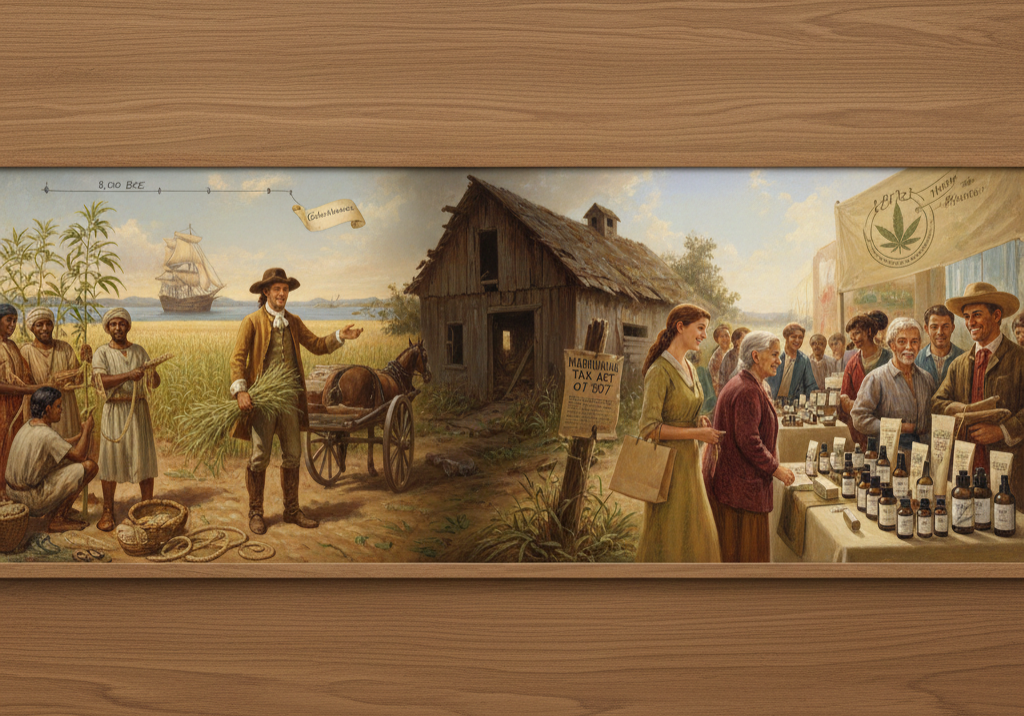
Hemp’s journey from ancient fiber to modern wellness spans millennia, beginning as early as 8,000 BCE when it was first utilized for its resilient textiles and nutrient-dense seeds. This history is deeply woven into the American story; in the early colonies, hemp was considered so essential for the production of naval rope and sails that farmers were often required by law to cultivate it. However, the industry entered a "Dark Age" of prohibition following the 1937 Marihuana Tax Act, which effectively caused hemp to disappear from the American landscape for decades. This period of restriction finally ended with the "Hemp Renaissance" sparked by the 2018 Farm Bill, a landmark piece of legislation that returned hemp to the mainstream and paved the way for the thriving wellness industry we see today.
Understanding the Big Two: CBD vs. THC
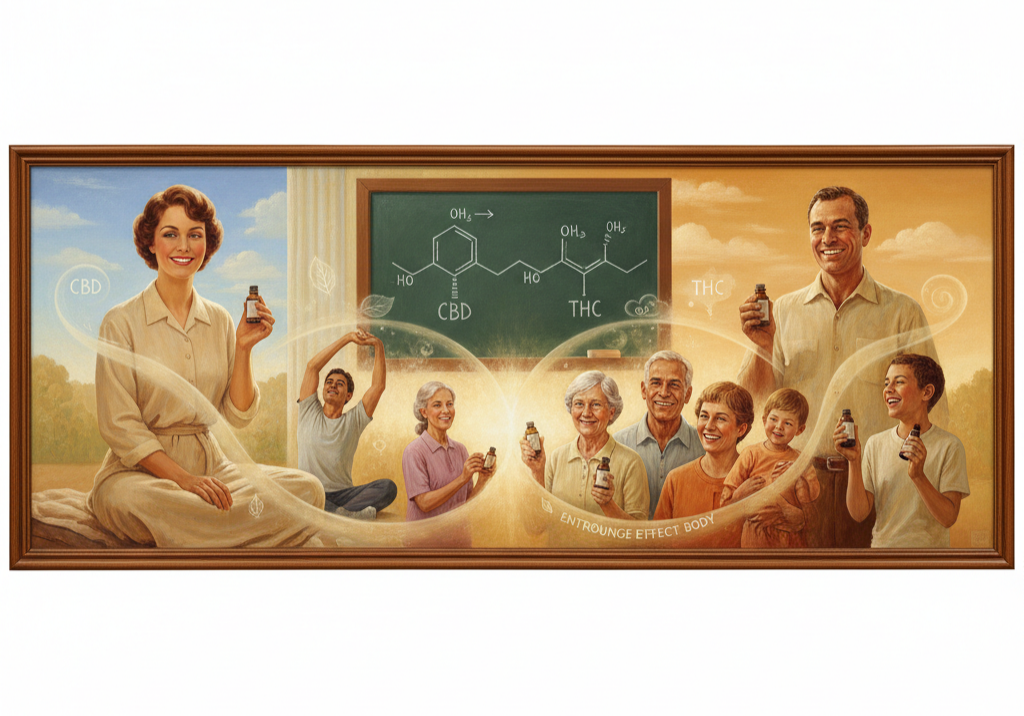
To understand the therapeutic potential of the cannabis plant, it is essential to distinguish between the "Big Two" cannabinoids: CBD and THC. Cannabidiol (CBD) is often hailed as the "wellness" molecule because it is non-psychoactive, focusing its effects on promoting internal calm, physical recovery, and systemic relief without a "high." In contrast, Tetrahydrocannabinol (THC) is the primary psychoactive compound responsible for the plant's euphoric effects; however, in the context of hemp-derived products, it is often utilized in micro-doses to provide gentle elevation and therapeutic benefit while remaining within legal limits. While both molecules are effective on their own, they are most powerful when used in tandem through a phenomenon known as the "Entourage Effect." This synergy suggests that cannabinoids and terpenes work better together than in isolation, creating a more comprehensive wellness experience that balances the body’s endocannabinoid system.
Finding Your Delivery Method
Choosing the right delivery method is essential for tailoring your wellness routine to your specific needs. Tinctures (Oil) are the preferred choice for those seeking fast absorption and precise, adjustable dosing, as they enter the system quickly when taken sublingualy. For those who prioritize convenience and long-lasting effects, Edibles (Gummies) offer a discreet and easy-to-use alternative that provides a steady release over several hours. Meanwhile, Topicals (Creams and Balms) are designed for localized, targeted relief of muscles and joints; they work effectively on the skin’s surface without ever entering the bloodstream. Regardless of the method you choose, a "Pro-Tip" for any consumer is to always review the Certificate of Analysis (COA). Reading these lab reports ensures the product’s safety and transparency by verifying its exact potency and confirming it is free from harmful contaminants like heavy metals or pesticides.
The Science of Wellness
For those who want to move beyond the basics, The Science of Wellness offers a deep dive into how hemp interacts with your unique biology. This advanced understanding shifts the focus from simple consumption to intentional wellness, explaining the complex internal systems and botanical profiles that allow cannabinoids to provide such diverse benefits. By exploring how the body’s master regulator responds to different plant spectrums and aromatic compounds, enthusiasts can fine-tune their experience to achieve specific physiological outcomes.
The Endocannabinoid System (ECS)
The ECS acts as the body’s "Master Conductor," maintaining homeostasis (internal balance) across vital functions like sleep, mood, and pain response. It operates through a network of CB1 receptors, primarily located in the brain and central nervous system, and CB2 receptors, found mostly in the immune system. While your body naturally produces its own endocannabinoids, hemp provides phytocannabinoids (plant-based) that mimic these internal signals to help restore balance when the system is stressed.
Types of Cannabis: Strains & Spectrums
Finding the right effect depends on the "Spectrum" and the "Strain." Full Spectrum products use the "whole plant" approach, including trace amounts of THC for maximum synergy, while Broad Spectrum offers those same benefits with 0.0% THC. Isolate is pure CBD with no other compounds. To further refine the "vibe," consumers look to strains: Sativa is generally "Up" (energizing), Indica is "Down" (relaxing), and Hybrids offer a "Balanced" middle ground.
What are Terpenes? (The Aromatherapy of Hemp)
Terpenes are the essential oils found in hemp that provide more than just a distinct aroma; they actively dictate the product's effects. Myrcene offers earthy notes and deep relaxation, while Limonene’s citrus scent provides an uplifting boost. For those seeking sleep support, the floral notes of Linalool are key, whereas Pinene delivers a crisp pine scent associated with mental clarity and focus.
Ready to get started?
Schedule a free estimate with us today